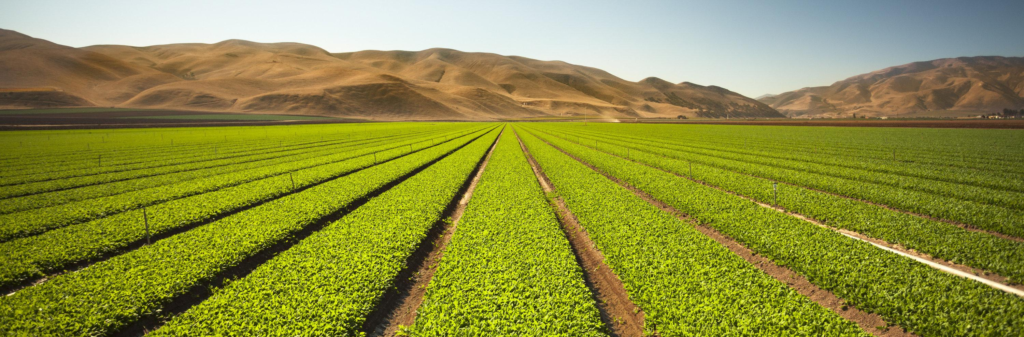
The Farm Equipment Planning Guide provides a structured approach to selecting agricultural tools and machinery based on farm size, production system, budget, and operational goals. Effective equipment planning is not simply about purchasing machinery—it is about building a system that supports productivity, efficiency, and long-term cost control.
This guide helps farmers and agribusiness operators evaluate equipment needs, compare machinery options, assess maintenance requirements, and make investment decisions that align with both short-term operations and long-term farm growth strategies.
Farm equipment decisions should be treated as long-term production investments rather than one-time purchases.
The right machinery system reduces labor dependency, improves timing efficiency, and increases overall farm productivity.
Direct Answer
The Farm Equipment Planning Guide explains that selecting the right agricultural tools and machinery requires evaluating farm size, crop type, labor availability, and financial capacity. The best equipment strategy balances productivity needs with operational costs, maintenance requirements, and scalability for future farm expansion.
Farmers achieve better outcomes when equipment planning is based on a structured decision framework rather than reactive or isolated purchasing decisions.
Farm equipment directly influences efficiency, production timing, and labor requirements. Poor equipment decisions can lead to operational delays, increased production costs, and reduced yield potential due to inefficient field operations.
In modern agriculture, machinery is not just a support tool—it is a core component of production systems.
Equipment planning determines how efficiently a farm can convert inputs such as labor, fuel, and time into agricultural output.
Main categories of farm equipment
Land preparation equipment: tractors, plows, harrows, cultivators
Farmers must decide whether to purchase equipment or rely on service providers such as machinery contractors. Each approach has advantages depending on farm scale and capital availability.
Factor
Own Equipment
Contract Services
Initial cost
High investment
Low upfront cost
Operational control
High
Limited
Flexibility
High scheduling control
Dependent on availability
Maintenance responsibility
Farmer responsible
Service provider responsible
Best suited for
Medium to large farms
Smallholder farms
Decision Framework: Farm Equipment Planning System
Step 1: Define production goals
Identify whether the farm is focused on subsistence, commercial production, or export-oriented scaling. Equipment requirements differ significantly across these goals.
Step 2: Analyze farm scale and layout
Larger farms require mechanized systems for efficiency, while smaller farms may benefit from compact or shared equipment solutions.
Step 3: Evaluate operational bottlenecks
Identify which farming activities consume the most time or labor, such as land preparation or harvesting, and prioritize equipment that addresses these constraints.
Step 4: Compare equipment options
Evaluate machinery based on cost, durability, fuel efficiency, maintenance requirements, and compatibility with existing systems.
Step 5: Assess lifecycle cost
Equipment decisions should consider long-term expenses, including maintenance, repairs, fuel consumption, and depreciation—not just purchase price.
Step 6: Plan scalability
Choose equipment systems that can support future farm expansion without requiring complete replacement.
A well-planned equipment system grows with the farm rather than becoming obsolete as operations scale.
Equipment decision comparison matrix
Equipment Type
Best For
Advantages
Limitations
Manual tools
Small farms
Low cost, simple maintenance
High labor requirement
Mid-scale machinery
Medium farms
Balanced cost and efficiency
Moderate maintenance needs
Fully mechanized systems
Large farms
High efficiency and speed
High capital and technical expertise required
Precision agriculture tools
Commercial farms
High accuracy, data-driven decisions
High complexity and cost
Agricultural Intelligence Insights
Farm equipment decisions often have long-term financial and operational consequences that are underestimated during initial investment planning.
Underutilized machinery is one of the most common sources of hidden cost inefficiency in agricultural systems.
Maintenance capacity is as important as purchase price—poor maintenance planning can reduce equipment lifespan significantly.
Farm mechanization should always align with labor availability; over-mechanization without operational demand can reduce return on investment.
Shared equipment models (cooperatives or contractor systems) can significantly improve access to mechanization for small and medium farms.
Practical Scenarios
Scenario 1: Smallholder mixed farming
A small farm with limited capital uses manual tools and occasional contractor services for land preparation and harvesting to reduce upfront investment costs.
Scenario 2: Medium-scale grain production
A commercial grain farmer invests in tractors, planters, and sprayers to ensure timely planting and crop protection during critical growth stages.
Scenario 3: Large-scale mechanized farming
A large agricultural enterprise uses integrated machinery systems including GPS-enabled tractors and combine harvesters to maximize efficiency and reduce labor dependency.
Action Checklist
Define production goals and farm scale requirements
List operational bottlenecks in current farm activities
Compare equipment options based on cost and efficiency
Evaluate total lifecycle cost, not just purchase price
Assess availability of maintenance and spare parts
Consider labor availability and mechanization balance
Plan for future farm expansion and scalability
Frequently Asked Questions
What is the Farm Equipment Planning Guide?
It is a structured framework for selecting agricultural machinery based on farm size, production goals, and operational needs.
Why is equipment planning important in farming?
Because machinery directly affects productivity, efficiency, and long-term production costs.
Should small farms buy machinery?
Not always. Small farms may benefit from shared equipment services or contractor-based solutions.
What is the biggest mistake in equipment planning?
Buying machinery without considering long-term maintenance and operational costs.
How do I choose between manual and mechanized systems?
Decision depends on farm size, labor availability, budget, and production scale goals.
Is equipment leasing a good option?
Yes, leasing can reduce upfront costs while providing access to modern machinery for medium-scale operations.
How often should farm equipment be upgraded?
Upgrade cycles depend on usage intensity, maintenance quality, and technological advancements.
Conclusion
The Farm Equipment Planning Guide emphasizes that successful agricultural mechanization is based on structured decision-making rather than isolated purchases. The right equipment strategy improves efficiency, reduces labor constraints, and enhances long-term farm productivity.
Farmers who align equipment investments with production goals, operational capacity, and financial planning build more resilient and scalable agricultural systems.